

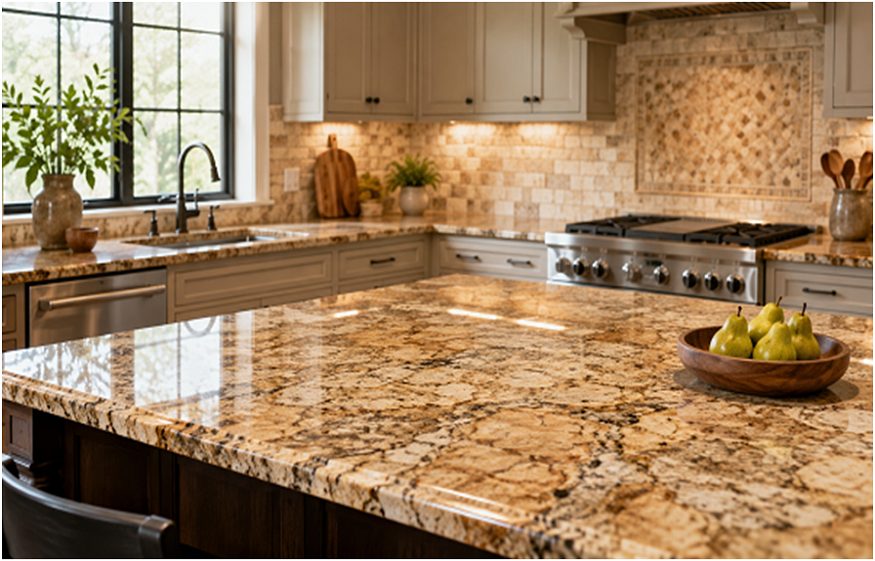
Warm-toned granite can make a kitchen feel more comfortable, layered, and connected. Cream, beige, brown, gold, black, and gray minerals often appear together in natural stone, which gives homeowners many ways to coordinate cabinets, flooring, backsplashes, and hardware. Therefore, I often consider warm granite when a kitchen needs more visual depth without relying on strong modern contrast. In Milwaukee, this type of stone can work especially well in traditional, transitional, and warm contemporary kitchens.
Start With the Natural Movement of the Stone
When I look at warm granite, I first study the balance between background color and mineral pattern. Some slabs show gentle movement, while others contain stronger spots, veins, and color changes. Therefore, I choose the amount of movement based on the rest of the kitchen. A stone such as amarello ornamental granite can provide a warm visual direction that may coordinate with light cabinets, natural wood, and earthy finishes. However, I still recommend comparing the actual slab with the other materials in the room. Natural stone varies, so one section may look lighter, darker, or more active than another. I also consider whether the countertop should act as the main feature. If the granite already contains strong movement, I usually keep other permanent materials quieter.
Key Takeaways
- Warm granite can connect wood tones, cream cabinets, flooring, and metal finishes.
- View the full slab because natural movement can vary across the surface.
- Balance strong granite patterns with simpler backsplash and cabinet choices.
Pair Warm Granite With White Cabinets
White cabinets can create a clean background for warm granite. However, the exact cabinet undertone matters. Bright white cabinetry may create stronger contrast. Meanwhile, cream or off-white cabinets can create a softer transition. Therefore, I place samples side by side before deciding. If the granite includes cream, beige, or gold, an off-white cabinet may help those tones feel more intentional.
Coordinate With Wood Cabinets
Wood cabinets naturally contain warmth, so they can work well with warm granite. However, I avoid matching every color too closely. For example, medium wood cabinetry may look better with a granite that includes lighter cream areas. This contrast keeps the room from becoming too dark. Meanwhile, lighter wood cabinets can support deeper brown or black mineral movement. Therefore, I focus on balance rather than exact color matching.
Use Flooring to Connect the Palette
Flooring covers a large area, so it can strongly influence the countertop selection. Warm wood flooring often works naturally with beige, cream, and gold granite. However, tile can also work when its undertone connects with the stone. I compare the granite and flooring under the same light. As a result, I can see whether the materials support each other before installation.
Keep the Backsplash Controlled
Natural granite often contains multiple colors and patterns. Therefore, I usually prefer a simpler backsplash. Cream subway tile, soft beige tile, or another quiet surface can support the granite without creating visual competition. However, homeowners who want more detail can still use texture. The key is to keep the color palette connected.
Consider Cabinet Hardware
Hardware can repeat small colors already present in the stone. Therefore, it can help unify the room. Brass may highlight gold or warm beige movement. Meanwhile, black hardware can connect with dark mineral specks. Nickel can provide a more neutral finish. I choose the metal based on the complete kitchen rather than the granite alone.
Work With a Countertop Specialist
Natural stone selection involves more than choosing a sample. Therefore, I like to visit a professional Granite Countertop Store where I can compare full slabs, discuss fabrication details, and understand how the stone may fit the kitchen layout. Full-slab viewing matters because the pattern can change across the stone. In addition, a specialist can explain seam placement, edge options, sink cutouts, and installation requirements. This planning reduces uncertainty and gives homeowners a clearer picture of the final result.
Think About the Kitchen Island
A large island provides space for warm granite to show its natural movement. Therefore, it can become the main focal point of the room. Some homeowners use the same granite throughout the kitchen. Meanwhile, others create contrast between the island and perimeter countertops. Both approaches can work. However, I make sure the colors connect through cabinetry, hardware, or flooring.
Consider Edge Style
The countertop edge can make warm granite feel either more modern or more traditional. A simple eased edge keeps the appearance clean. Meanwhile, decorative profiles can add more detail to classic cabinetry. Therefore, I choose the edge based on the room’s overall style. I also compare fabrication costs before making a final decision.
Read More: Are Shaker or Flat Cabinets Better for Small Kitchens?
Plan Around the Sink
The sink area gets frequent use, so I pay attention to both appearance and function. An undermount sink can create a smooth look because the granite edge remains visible around the opening. Therefore, fabrication quality matters. I also decide on faucet holes and accessories before cutting begins. This helps avoid changes later.
Understand Maintenance
Granite is a natural stone, so proper care helps protect its appearance. Therefore, I ask about sealing and recommended cleaning methods. Daily maintenance can remain simple. I usually suggest wiping spills promptly and using cleaners that suit natural stone. In addition, homeowners should understand that different granite varieties may have different care needs.
Compare the Stone Under Natural Light
Warm granite can look very different depending on the lighting. Therefore, I view samples near windows whenever possible. Morning light may bring out cream tones, while evening light may make gold and brown minerals feel stronger. For Milwaukee homes, seasonal changes in daylight can also affect the way the countertop appears. As a result, I prefer colors that look balanced under several lighting conditions.
Use Under-Cabinet Lighting
Under-cabinet lights can improve both function and design. They brighten work areas while also showing the countertop’s natural pattern. However, bulb temperature matters. Warm lights can make beige and gold tones stronger, while cooler lights may make gray and black minerals more visible. Therefore, I consider lighting before choosing the final slab.
Keep Large Patterns in Balance
Granite with strong movement can become visually dominant. Therefore, I avoid adding too many competing patterns nearby. For example, a dramatic granite countertop may work best with plain cabinet doors and simple tile. Meanwhile, quieter granite allows more flexibility with backsplash patterns or detailed cabinetry.
Think About Long-Term Flexibility
Countertops often stay in place much longer than paint or hardware. Therefore, I choose granite that can support future updates. Warm neutral stone can work with several cabinet and wall colors. As a result, homeowners may change small details later without replacing the countertop. However, I still want the surface to have personality. Natural minerals and variation can provide character without making the room depend on one trend.
Consider Room Size
Large kitchens can often support stronger patterns because the materials have more space around them. Meanwhile, small kitchens may benefit from lighter warm granite. However, dark or active stone can still work in smaller spaces when lighting and cabinet colors remain controlled. In Milwaukee, many homes have different kitchen sizes and layouts. Therefore, I choose the granite according to the actual room rather than using one design rule everywhere.
View More Than One Slab
Because granite is natural, slabs from the same stone type can still vary. Therefore, I compare more than one slab whenever possible. One may have stronger dark minerals, while another may look lighter and more even. This difference can influence how the countertop works with cabinets, flooring, and backsplash tile. Consequently, full-slab selection gives homeowners greater control over the final design.
Read More: How a Garage Remodel Can Turn Wasted Space Into Everyday Value
Final Thoughts
Warm-toned granite can give a kitchen natural depth and a comfortable sense of character. However, successful design depends on more than choosing a stone that looks attractive in a showroom. I compare the slab with cabinets, flooring, backsplash, lighting, hardware, and room size. I also consider how much movement the kitchen can support and how the surface will work with everyday routines. Ultimately, I believe warm granite works best when it connects several parts of the kitchen without overwhelming them. With careful slab selection and thoughtful coordination, homeowners can create a space that feels welcoming, functional, and visually balanced for years.